

Mass production of plastics began in the 1950s and in the seven decades since, more than 8.3 billion metric tons of it has been created. Considering that 91% of plastics are non-recyclable, it’s no surprise that billions of tons of plastic waste have ended up in landfills—and the ocean—every year.
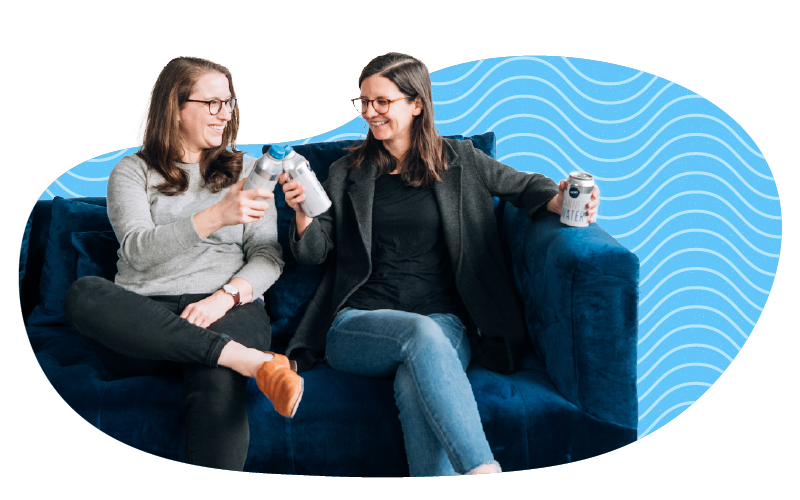
Specifically, plastic water bottles—despite a push toward alternative, sustainable packaging across many consumer items, the plastic water bottle industry has continued to grow with relatively little change. Horrified at the single-use plastic pollution problem, Open Water founders Jess Page and Nicole Doucet set out to find a pragmatic solution in 2009.
They looked at various materials, from glass to plant-based plastics to cartons, before settling on aluminum. Aluminum cans were the most recycled beverage packaging in the world, but no one was using them for water at that time. Over the next five years, they worked to develop fully recyclable and reusable aluminum bottles and cans of purified water. Now, Open Water sells its products in all 50 states and became the world’s first certified climate neutral bottled-water company as of 2020.
Last year also created new challenges in the fight to reduce single-use plastics, mainly due to the ongoing COVID-19 pandemic. It is estimated that more than a billion face masks entered the ocean by the end of 2020. While that’s a sobering fact, Open Water founders believe the sustainability conversation will only be accelerated going forward. “I think it has also made us realize how connected we are and how much of an impact we have on the environment,” Doucet said in Inc earlier this year.
As the duo gets ready to close out another #PlasticFreeJuly, they took the time to answer questions about their company, share predictions about the future of sustainable packaging and give advice for aspiring founders.
What was your background prior to founding Open Water?
Nicole and I came up with the concept for Open Water while we were undergrads at the University of Miami and pursued the business essentially straight out of college. My background was focused in design while Nicole had experience in finance and studied economics in school. We were certainly a bit naive but had so much passion for cleaning up ocean plastic. In a lot of ways, our inexperience proved to be an asset since it allowed us to approach everything with an unbiased outlook.
Why did you create Open Water?
While in school, we happened to wander into a documentary screening about plastic pollution—and we walked out of the theater, minds blown. The plastic waste stream is so massive and even though there are amazing reusable bottles out there and more and more refill stations, the bottled water category has grown essentially every year since its inception. It was clear to us that a pragmatic solution that considered consumer habits could have a meaningful impact on cutting down on plastic pollution.
What are your predictions for the future of the industry?
As the conversations around plastic waste, and sustainability more generally, continue to gain momentum, there will be a growing push towards alternative packaging options in every category. This shift will be towards the materials that are supported by the world’s recycling infrastructure. Sustainability initiatives will be a must for all consumer brands, with shoppers expecting continual and incremental improvements all the time. The companies that will stand out are the ones who are forward-thinking in this space.
What do you wish you would’ve known at the start of your founding journey?
In the time between the initial idea to when we actually launched our first product, three or so years had gone by. We were so close to the brand that we forgot to put ourselves into the shoes of our prospective customers. This led us to launch with a name and brand that led to a lot of confusion. Luckily, we were early enough to revamp before the subcategory started hitting its stride, but we certainly would have done ourselves a favor to remember to take a step back at the start.
“We were so close to the brand that we forgot to put ourselves into the shoes of our prospective customers.”
What advice would you give to new or future founders?
Find a co-founder you can trust through and through. This has been invaluable to the growth of Open Water.
Underrepresented (minority, LGBTQ+, women) founders have a habit of selling themselves short. We learned early on that the best way to be taken seriously is to set big goals and over-deliver on them.
Featured image source: drinkopenwater.com
More on sustainability, climate tech and female founders
Eco-friendly paper products
Read our list of 6 sustainable toilet tissue startups that are on a roll
Innovation in the food supply chain
Download our PitchBook Analyst Note: Journey to a More Sustainable Food System
Understanding climate tech terminology
Read through our climate tech market glossary to gain a better understanding of the landscape
Female founders and the impact of COVID-19
Download the All In: Female Founders and CEOs in the US VC Ecosystem report
LGBTQ+ founders and investors
See Open Water founders in PitchBook’s list of 33 LGBTQ+ founders, entrepreneur and VCs you should know