

Limited partners, also known as LPs or allocators, manage money on their beneficiaries’ behalf, primarily by committing capital to general partners (GPs). While LPs can allocate capital across a wide variety of investments, for the purpose of this article, we’ll focus specifically on LPs in the context of private equity (PE) and venture capital (VC) investing.
Private equity and venture capital have faced their share of challenges and what has worked in years past may not work going forward. In fact, PE returned only 6.6% IRR for the year through June 2023, much lower than the 10-year return of 16.4% IRR. VC also declined 8% as it continued to backtrack on 2021 valuation markups.
So, where does that leave LPs? With lengthening hold periods and a tough exit environment, many LPs are now reconsidering their allocations. And as we’ll explore in more detail, portfolio diversification plays a key role in the relationship between risk and return.
Understanding the role of limited partners in private equity and venture capital
It’s helpful to understand that a limited partnership is often the source of institutional capital in private market investing. GPs agree to manage an investment fund, while limited partners are passive investors that contribute the capital needed to fund its operations. This partnership is beneficial for LPs, because they may not have the time, resources, or network needed to actively manage their capital. Additionally, LPs are more protected from risk than GPs.
That said, it’s worth noting that some LPs are willing to take on more risk than others. If you are interested in investing in PE or VC, but hope to limit your risk, here are a few things to consider:
Benefits of diversification in investment for limited partners
Private market investments are inherently riskier than other types of investments. With closed-end fund structures, different regulations, and companies in different stages of their development, LPs are often left with a lack of crucial information at the time of their investment. That said, diversification can help keep limited partners from putting all their eggs in one basket—and potentially suffering a major financial loss.
Risk reduction through exposure to various companies and industries
It’s common for LPs to hold diversified investments across different companies and industries—from financial services to healthcare, energy, consumer products and services, and more. Even if you invest in two companies within the same sector, consider that one may make more strategic errors and perform less well than the other.
Another option is to capitalize on growth opportunities within different stages of company development. For instance, you might consider investing in a PE firm that specializes in late-stage funding rounds, alongside another firm that focuses on growth-stage companies. By doing so, you can reduce the potential impact of a negative event on your portfolio, as your risk would be spread across different assets.
Challenges faced by limited partners in diversifying their investments
While a diverse portfolio sounds great in theory, in practice, this is often easier said than done:
- Allocators have to actively track their portfolios to ensure appropriate risk mitigation for their needs at any given time.
- Private equity investments tend to be long-term, and as economic conditions change, so too, can an investment’s risk profile.
Given the nature of LP investments, allocators must simply trust that their partners can effectively manage funds and deliver expected returns—despite any concerning macroeconomic developments, such as shifting interest rates and inflation.
Q1 2023 Global Fund Performance Report
Our latest Global Fund Performance Report digs into the factors affecting fund performance and how they might shift future returns.Download report
Strategies for diversification of your portfolio
Let’s explore how allocators can identify diverse investment opportunities within PE and VC.
Allocating investments across different fund strategies
Allocators might consider a combination of growth equity and buyout funds, among venture capital and other strategies within their portfolio. Think about it this way: if you have investments in two asset classes, and one does poorly, your capital will be preserved, which would allow you to continue investing. Depending on their risk tolerance and return objectives, however, the individual breakdown of investments can differ greatly.
With access to in-depth data and insights, you can make more informed decisions about how much to invest in which strategies. Specifically, PitchBook enables LPs to:
- Stay current on the private market and macroeconomic landscape
- Contextualize fund performance in shifting markets
- Develop commitment schedules to achieve target allocations
Learn more in this recent blog post.
Sector and industry diversification
LPs can potentially balance out their risk by increasing their exposure to different industries and sectors. If you only invested in software companies in 2022, for instance, your portfolio would have been largely impacted by decreased company valuations and a stalled exit environment—and your total performance might have been lower than if you had diversified investments.
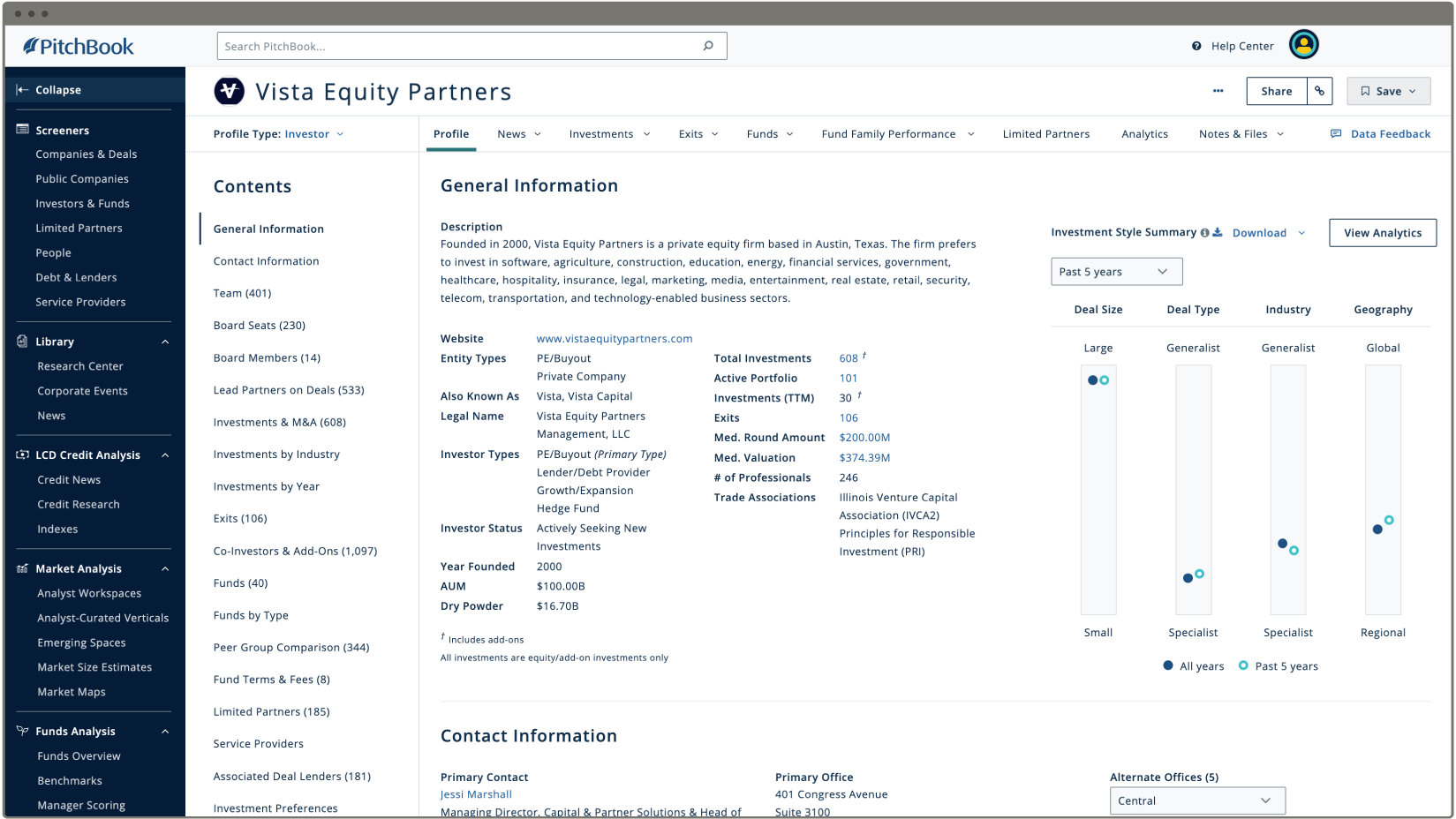
This is when it can be helpful to have a strong understanding of a GPs’ overall investment style. If you are not sure whether a GP you are considering is the right fit, you can use PitchBook’s investment style summary to pinpoint which managers are generalists, specialists, or targeted—and what percentage of a firm’s deals are focused on a specific sector.
Geographical diversification
Diversifying investments across geographies is another way LPs decrease their risk profile. To give one example, political conditions, such as your exposure to war and different macroeconomic policies can impact your portfolio returns and will, of course, vary by location.

Note that within PitchBook, you can easily identify investments by region. View high-level trends in recent investment activity through data visualizations and exportable tables—or get more granular in the Analytics tab.
Co-investments and direct investments
While funds are, by design, more diversified, direct investments can give you the option to identify more specific targets than fund investing and can still have a place in a diversified portfolio strategy.
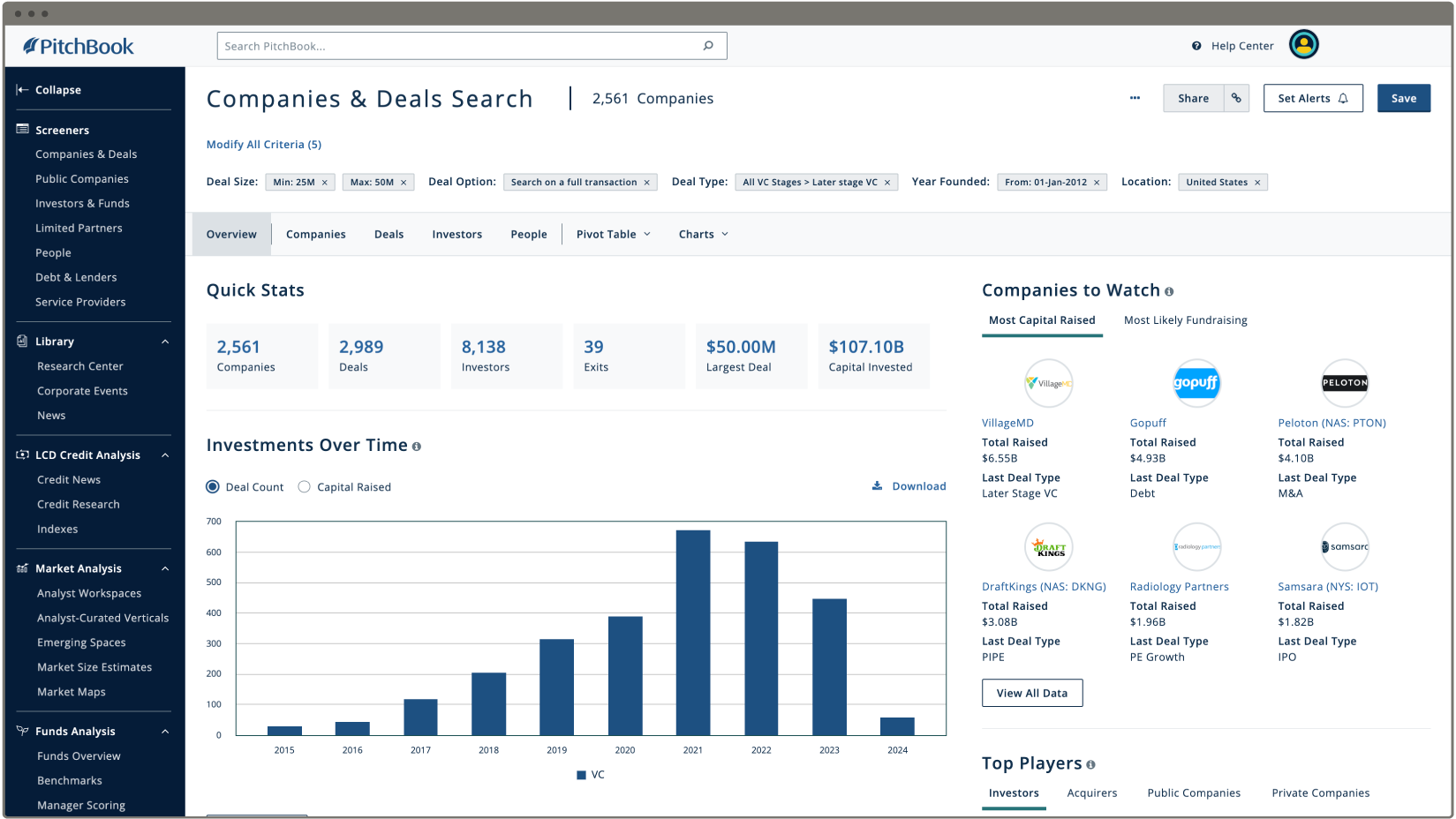
Below, we’ve included an example of how to identify opportunities that align with your investment criteria using our Companies & Deals search.
Investment in different stages of company growth
Many PE and VC firms will focus primarily one stage of company growth. That said, investors have the opportunity to hedge their bets by diversifying across different points in the business lifecycle:
- Early-stage investing: Investors that get in on the ground floor of a successful startup have the potential to achieve higher returns. This can seem like a numbers game, however, as many early-stage companies inevitably fail.
- Growth-stage investing: At this stage, investors are looking to help a company scale its operations by adding value—although there is still a significant risk that the company may not be able to execute on its business plan effectively.
- Late-stage investments: Late-stage investments can also be risky, as valuations frequently fluctuate, and companies may not have a strong exit.
Q4 2023 PitchBook-NVCA Venture Monitor
There’s no question that VC has had a tough 12 months. But despite the $71.6 billion less capital invested in the asset class than in 2022, sunnier skies are ahead.Download the report
Due diligence and fund manager selection
Once you have an idea of which strategies you’d like to invest in, the next step is to decide which GPs you want to work with.
“While some LPs stated that their manager selection criteria did not change in 2023, many institutional investors would agree that a significantly slowed fundraising pace has allowed them more time to conduct due diligence with a high selection bar for new managers.” – Kaidi Gao, Analyst, Venture Capital
Read the full report, PitchBook Analyst Note: US VC Fundraising from an LP Perspective»
When evaluating fund managers, it’s crucial to understand key performance benchmarks. As you conduct your due diligence, ask yourself:
- Does this fund outperform the public market equivalent (PME)?
- How does performance compare relative to other funds of the same vintage year?
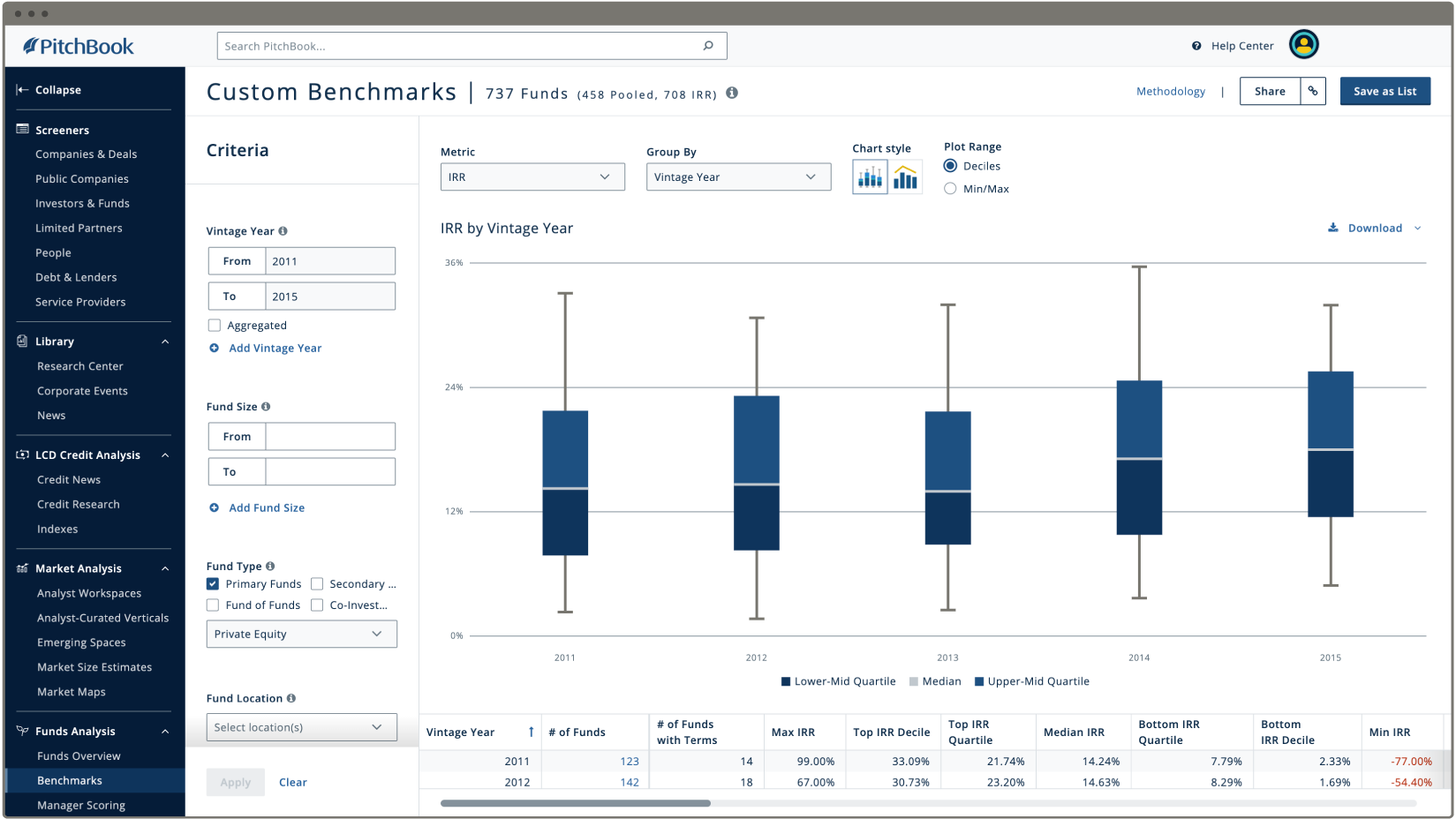
With PitchBook’s private market benchmarks, you can better gauge performance of an individual fund in relation to its peers and evaluate broader performance across asset classes. We even provide transparency into underlying fund performance data—a huge benefit for allocators working with closed-end fund structures. If you are looking for further context into GPs’ fund performance, Manager Scoring can also help.
About Manager Scoring
Discover top performing fund managers using our three proprietary frameworks—fund performance scores, capital call speed scores, and distribution speed scores. These frameworks provide a direct comparison of track records across different vintages and operating environments, so you can better assess which GPs produce consistent results.Learn more
Monitoring and adjusting a diversified portfolio
The strategies and tools above may help set your portfolio up for success, but of course, conditions can change. Even a diversified portfolio should never be static.
As our analysts have explained, the math is materially different now than it was in a low interest rate environment. An allocator with a relatively conservative investment strategy might not need to include as many high-risk PE and VC investments in their portfolio to achieve their target allocations today. They might then shift some capital into a safer asset class, like bonds—if they have the liquidity and flexibility within their mandate to do so.
However, as many LPs have noticed, this is not always a given.
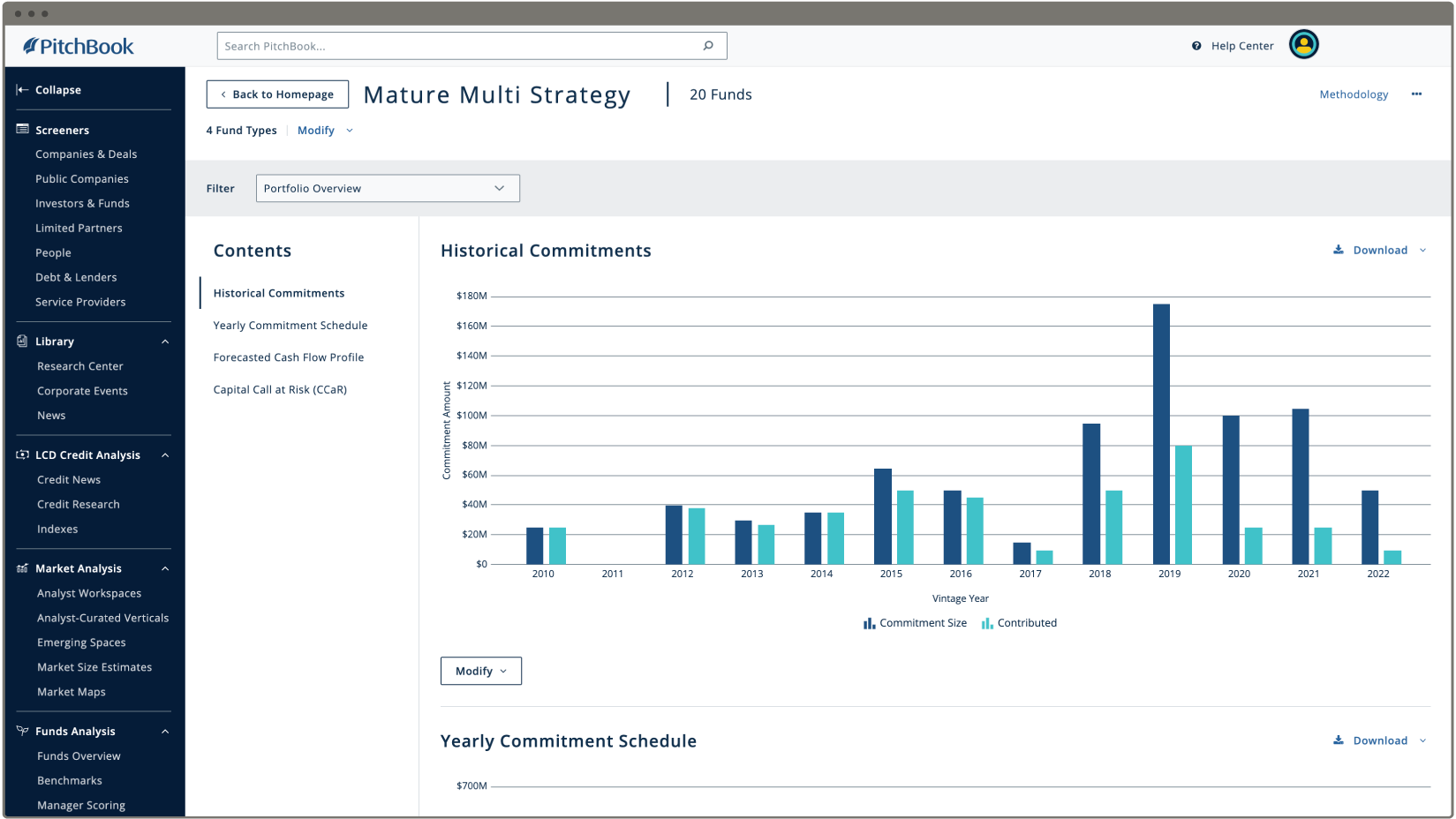
It is, undoubtedly, tough to find the right balance of cash going in and cash going out. That’s why we created PitchBook’s Portfolio Forecasting tool. Backed by historical data, Portfolio Forecasting help LPs manage their cash flow more effectively with robust models that go beyond back-of-the-envelope math.
Conclusion
We hope the tools and strategies above are helpful as you consider how to diversify your own portfolio. If you are still weighing your options, PitchBook can provide the insights you need to move forward with confidence.
Note that every allocator will have a different approach to risk management, particularly as economic conditions continue to change. Some LPs may have strict mandates, while others have more flexibility to adjust their allocations as needed. Either way, diversification is necessary for limited partners today.
About PitchBook for limited partners
PitchBook helps limited partners monitor risk and return across asset classes and strategies. With access to world-class data and robust allocation tools—like Portfolio Forecasting, Manager Scoring, and benchmarking—you can make informed decisions at every stage of the allocator’s journey.
Ready to explore PitchBook?
Already a PitchBook client? Log in