

As the number of people looking to found a startup has increased over the years, so has the number of accelerators looking to help them achieve their dreams (for a chunk of equity).

With so many different options to choose from, we thought it would be helpful to do a high-level comparison of some of the more popular accelerators to give an idea of how participants of each program perform on the funding trail. We pulled the data from the PitchBook Platform to see how each accelerator ranks in two ways:
1. Proportion of companies that went on to raise a follow-on round.
2. Proportion of companies that went on to raise each successive follow-on round.
Below are charts showing the results (click to enlarge).
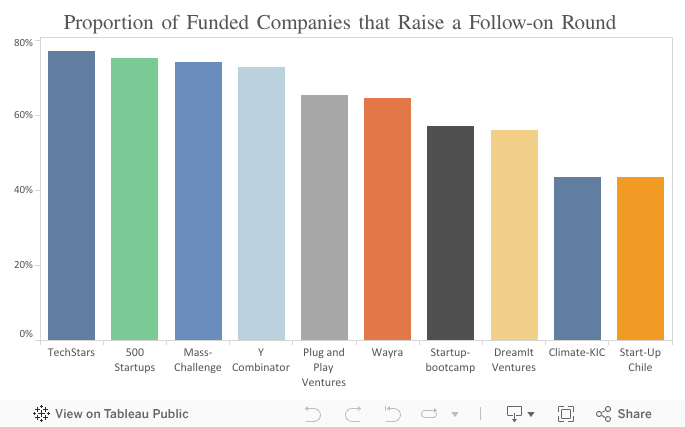
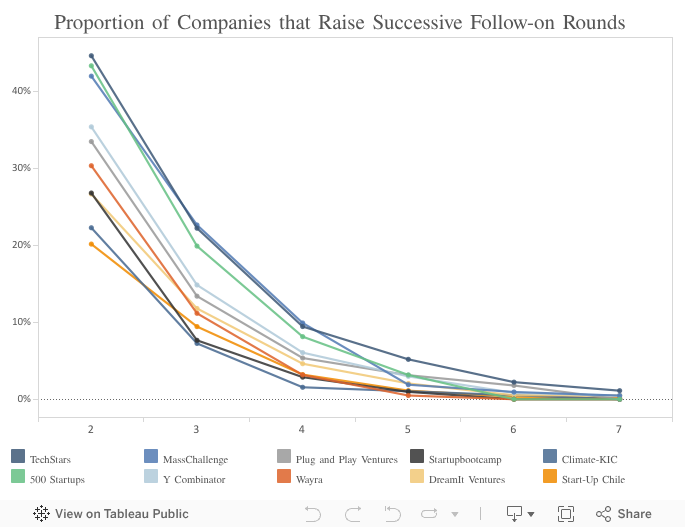
There appears to be a top four, with Y Combinator, TechStars, 500 Startups and MassChallenge each having >70% of their companies raise a follow-on round. Several factors can affect these data points and should be considered while interpreting these charts. For example, the larger, more well-known accelerators may have access to a wider breadth of potential follow-on investors than smaller, lesser-known accelerators. This could definitely boost the follow-on success of a graduating class. That being said, if you’re a founder who is looking to accelerate your company’s growth, it may be wise to use the data above.
PitchBook Platform subscribers can click here to see more data on Y Combinator, TechStars, 500 Startups and MassChallenge. If you’d like to access this data, contact us today.
Learn about our editorial standards.
