
Turning an idea into a profitable business can be an insurmountable hurdle—even for the biggest VC-backed startups. Snap (NYSE: SNAP), for example, lost $514.6 million in 2016 and indicated in its February IPO filing that it may never be profitable. The creator of the ephemeral video and photo app then went on to post a 1Q 2017 loss of $2.2 billion.
TransferWise, the British provider of a platform for foreign currency exchange, seems to have avoided that fate. The fintech business reportedly became one of London’s few unicorns just five years after its 2011 founding and has been profitable since the beginning of 2017. It currently generates £8 million in revenue a month and is expecting 150% growth this year.
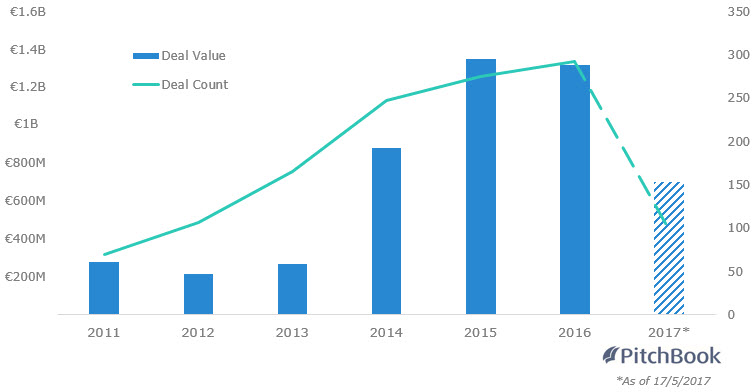
The success of TransferWise will likely only bolster interest in fintech, as consumers increasingly demand ease of use and no hidden fees when it comes to managing their money. This has sparked a recent flurry of new companies specialising in different fintech-related areas, be it mobile payments, direct lending or currency exchange. Indeed, per PitchBook data, VC investments in European fintech companies rose 6% between 2015 and 2016 and investment in the sector is on pace for another strong year, with 97 deals completed so far in 2017.
VC investment in European fintech companies
Peer-to-peer lender Funding Circle, which raised £80 million in January, is another beneficiary of 2017’s heightened interest. And VC money for young companies in these fintech subsets could keep coming. Notion Capital, a VC which houses several fintech companies, closed a £107 million fund this week and launched another £60 million vehicle. While VCs can be accused of spending loosely, TransferWise’s success story might lead them to realise that the smart money is in fintech.
PitchBook subscribers can access Europe’s VC fintech deal data using our Platform.
Learn about our editorial standards.
