
As much as we wish it weren’t the case, even the most loyal PitchBook readers are likely to miss content here and there. So to help people stay in tune with what others are reading and sharing, we decided to aggregate some of our most popular blog posts of February—just in case they slipped under your radar.
If you’d like to receive these posts in your inbox when they publish, you might consider signing up for one of our newsletters (joining an audience of 400,000+ industry professionals already subscribed).
One-third of U.S. startups that raised a Series A in 2015 went through an accelerator
The topic of accelerators is among the more contentious in today’s startup industry. More and more seem to be popping up every month with different vertical focuses and value propositions for early-stage founders. Opinions on the matter range. Some doubt that the value accelerators provide is worth the equity they take, while others say they play a valuable role in the industry, vetting and training startup founders and in turn creating more quality companies. One thing is not arguable, accelerator programs are playing an increasing role in today’s venture capital ecosystem.
But just how big that role is can be difficult to quantify. We elected to look at the proportion of Series A rounds completed each year by companies that have graduated from an accelerator program. Check out trends in that metric by clicking here.
The supply & demand economics behind the current VC boom and crunch
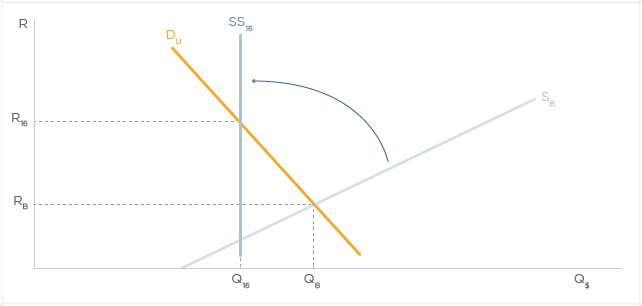
Overnight it seemed the venture industry reached an abrupt standstill. The “unicorn” term now means overly inflated valuation in the process of negotiating a down round. The daily news is full of departing CEOs, layoffs, zombie unicorns and “Who’s next?” punditry. How did this all happen and with such speed? Is there an economic model that can explain the boom and bust of this complex market?
Well, it turns out it’s pretty simple—a shift in the demand curve for venture capital followed by two shifts in the supply of venture capital led to a market way out of its long run equilibrium range. This led to a fragile situation where the recent market correction caused a dramatic short-term shift in supply of venture capital, taking us to where we are now. Click here for more analysis.
Disruption hits early-stage venture capital
Venture capitalists specialize in backing companies that are looking to change and innovate a specific market, so it’s a bit meta that their industry is now the one being disrupted. New funding sources, such as AngelList and WeFunder, have been popping up over recent years, offering entrepreneurs different options when looking to raise capital.
Although these services haven’t yet been around for all that long, their presence has been felt and by all measure they seem to be a force to be reckoned with. For a deep dive into these alternate options for early-stage companies seeking funding, check out the full post here.
Barbarians at the ticket gate: The PE moguls who own 1/4 of the NBA

There appears to be a new breed of NBA owners: Men who made their fortunes in private equity becoming the public faces of their basketball franchises. Seven NBA teams are majority owned by men with private equity backgrounds, all of whom bought into the league in the past 18 years.
This new species of owner has raised concern among some fans. Will the PE heavyweights do right by the public and their ticket holders, paying what it takes to win? Or will they instead treat the franchises as assets, stripping away excess fat to streamline operations, potentially with adverse effects on the basketball court? Read more here.
Top Investor Tuesday — Healthtech
Healthtech is among the more exciting up-and-coming industries these days, right there with the likes of VR/AR, AI and bitcoin, making it a fitting space to highlight in our recurring Top Investor Tuesday feature. Not only are old markets like health insurance being disrupted and changed, but new industries like digital therapeutics have sprung to life with the advent of wearable computing.
VCs have taken notice and have been pumping funding to these startups. We broke down investment trends in healthtech and ranked some of the top venture investors in the sector since the start of 2010: click here.
Hustle & cash flow: 11 rappers in venture capital

Rappers are in the business of themselves, and successful rappers are great at it. From creating their beats and tracks to selling out concerts and building their brands, artists know just what it takes to grow their worth. A number of rappers—as well as other musicians—have been able to use their business acumen to become successful angel investors, partners at VC firms and business founders as they create avenues to grow their brand beyond rap.
As Jay Z once said: “I’m not a businessman, I’m a business, man!” Click here to read about 11 rappers who have found success in the world of venture capital.
8 charts that capture today’s U.S. PE middle-market landscape
Activity in the U.S. PE middle market remained at an elevated level in 2015, though total deal value decreased by 12%. Part of this decline can be attributed to a record 2014, as covered in our latest U.S. PE Middle Market Report, but we also think we are beginning to see a normalization around multiples. The report offers in-depth analysis on the factors driving activity, but if you’re looking for a visual summary on the state of the U.S. PE middle market, covering dealmaking, exits, fundraising and more, click here.
Breaking down 2015 private co. CEO salary increase by industry
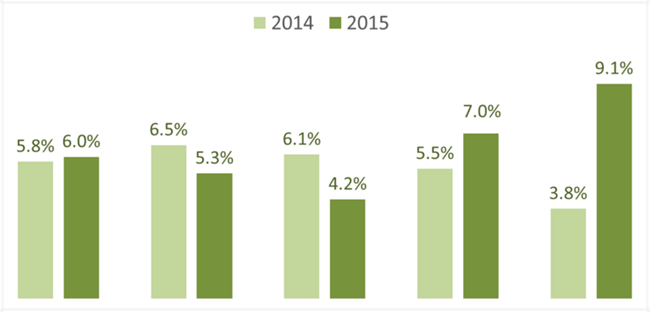
For much of 2015, one of the hottest topics for private companies was valuations and how many thought they were getting out of control. That conversation has shifted—tech stocks are performing poorly, affecting the value of their still-private competitors and many are speculating which of the unicorns will take major hits through either a down round or a haircut IPO. Exit prospects for private, VC-backed companies are uncertain, and some of the executives leading these companies may be feeling the heat.
So, how have these trends affected the salaries of private company CEOs? We have data on 2015 salary increases by industry, courtesy of the Thelander Year-End Merit Increase & Option Pool Survey: take a look here.
Early stage companies: Get ready to be punched in the face
Sand Hill East Ventures managing partner Josh Burwick is a regular contributor to PitchBook, and one of his posts last month served as a warning to startups as fundraising has tightened, deals are taking longer to put together, and investors are becoming more selective:
“Spoiler alert for early stage growth companies: If you do not have a business plan that will allow you to reach profitability/scalability with current capital, then get ready for the Mike Tyson punch in the face that is coming in 2016.”
Read the full post here.
Learn about our editorial standards.
