

Prediction
Median early-stage valuation step-ups will hit 2.0x in 2019.
Rationale
Two major factors driving early-stage VC valuations higher include firms receiving their first fundraise at a later age and increased investor competition.
Caveat
Challenges to early-stage VC valuations hitting 2.0x include changing macroeconomic conditions, investor expectations and a general market shift toward larger funds and late-stage deals.
Background
Early-stage valuations have increased sharply in recent years, with the median pre-money valuation ticking up to $30 million in 2019 (up from $25 million in 2018, according to a recent Venture Monitor). Investment activity has been propelled by a cohort of attractive, more established seed-stage startups and increased interest from CVCs and nontraditional investors. Further, high levels of capital availability and a preference for larger deals has helped to fuel rapid growth in early-stage companies.
Case study
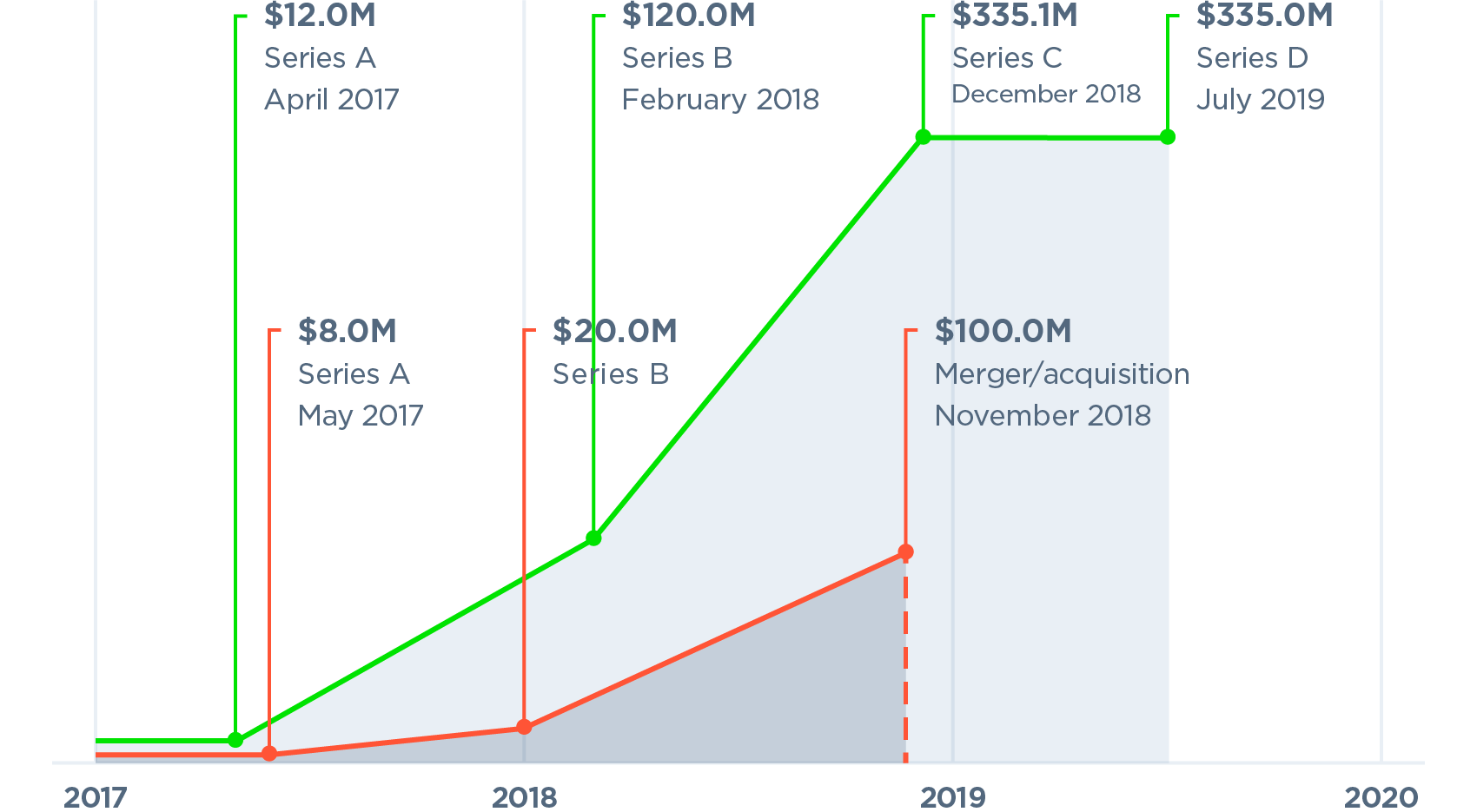
Known for its brightly colored bikes and scooters, Lime quickly raised massive amounts of capital—receiving $802.1 million over five rounds between 2017 and 2019. Altogether, 50 investors including GV, IDG Capital, Bain Capital Ventures, DCM Ventures and Manhattan Venture Partners contributed to Lime’s rapid ascent to being a major player in the mobility space.


Conclusion
Forces contributing to higher median early-stage valuations have not let up in the first half of 2019, and we expect that to continue. In fact, we’ve seen that startups raising an early-stage round are now fully doubling their valuation from the previous financing on a median basis.
With larger VC funds that need to be deployed and deep-pocketed tourist investors continuing to enter the space, larger deals and valuations are likely to persist—even if the magnitude of valuation step-ups cools.
Get more insight into 2019’s major VC trends with our 2019 VC Outlook 1H Follow Up report.