

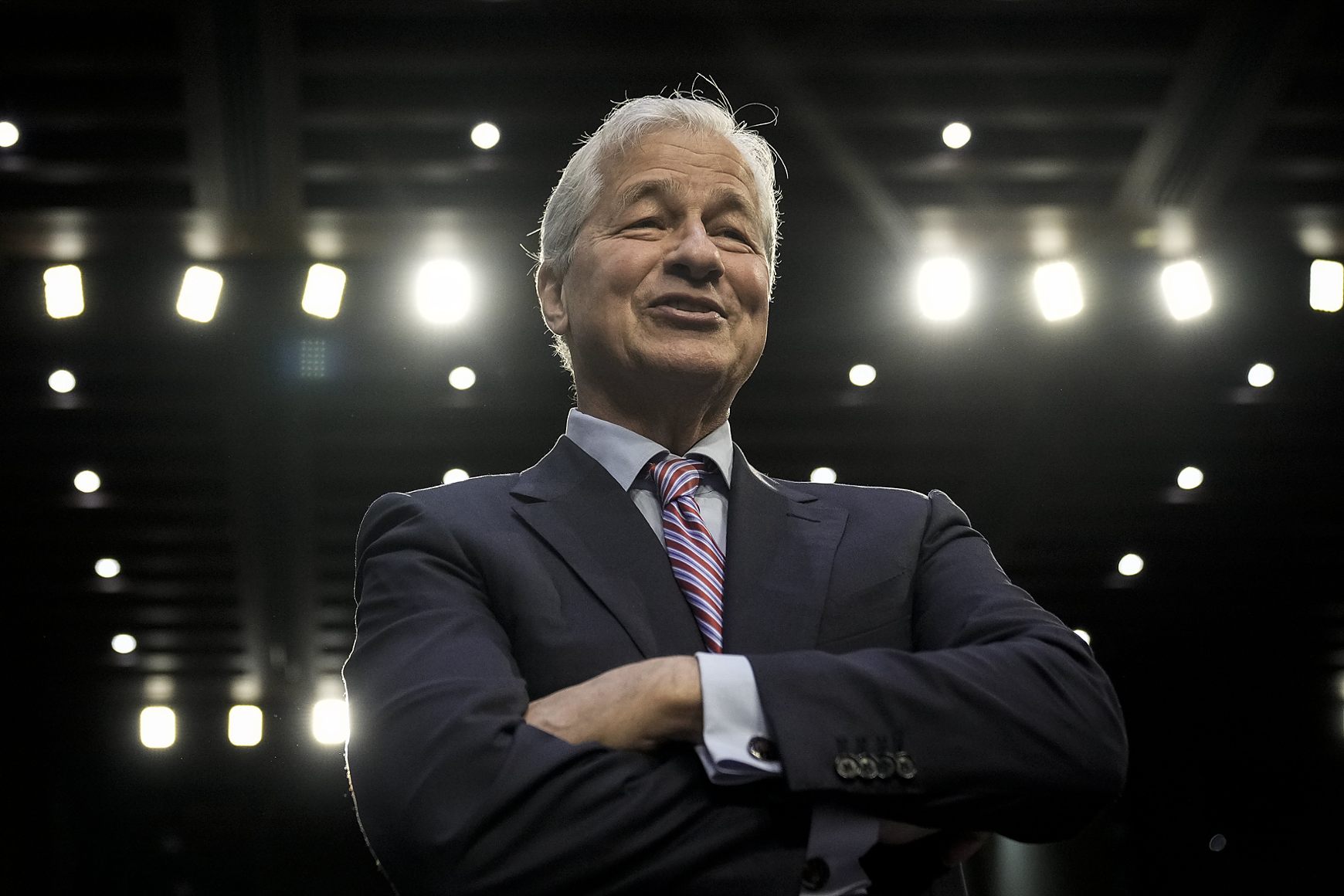
Deposits at JP Morgan Chase swelled by $50 billion following the banking crisis in March. Now, the challenge will be to keep those customers.
The collapse of Silicon Valley Bank has presented the banking giant with an opportunity to capitalize on the turmoil by winning over the VC firms and startups that SVB served. JP Morgan has sought inroads in the tech IPO market, beefing up its ranks with SVB’s own leaders to better serve founders and investors earlier in the company lifecycle.
“As you would expect, we saw significant new account-opening activity and meaningful deposit and money market fund inflows,” said Jeremy Barnum, CFO of JP Morgan, at the start of its Friday earnings call.
The bank’s leaders were optimistic that the risk of contagion to the banking system had been contained, despite calamities that sank Signature Bank, SVB and Credit Suisse.
“You’ve already seen things calm down quite a bit, particularly in deposit flows,” CEO Jamie Dimon said in the call. "[This crisis] will pass.”
JP Morgan’s profits jumped 52% in Q1, sending shares up 7.55% Friday. Higher interest rates have been a boon for the bank, as well as competitors like Citigroup and Wells Fargo, which also reported earnings Friday.
JP Morgan now seeks to retain its new depositors, which Barnum admitted was a tricky proposition.
“By definition, these are somewhat flighty deposits because they just came in to us. So it’s prudent and appropriate for us to assume that they won’t be particularly stable,” he said. Barnum suggested that a good chunk of that $50 billion will migrate to money funds, or to competitors.
“We’re just being realistic about the stickiness of [those deposits],” he said.
Holding onto those depositors could be extremely lucrative.
One of the advantages to stepping into SVB’s shoes is that the lender could develop relationships with founders much earlier on in the game, instead of waiting until a company is near IPO.
JP Morgan has been vying to deepen its customer base in the venture capital and startup tech market for years. Big banks getting involved in venture-backed IPOs is a relatively new phenomenon: In the 1990s, that slice of the underwriting business tended to be more the domain of boutique investment banks like Alex Brown and Robertson Stephens. Then Morgan Stanley and Goldman Sachs executive started fishing around Silicon Valley, and eventually, other players jumped in as well.
Ridesharing specialist Lyft‘s 2019 IPO was one of JP Morgan’s most high-profile underwriting deals in recent memory. That same year, it hired a top banker from Silicon Valley Bank, Pamela Aldsworth, to run its VC strategy and develop deeper relationships with top VC firms. JP Morgan also led WeWork‘s failed IPO in 2019.
The bank still generally trails Morgan Stanley and Goldman Sachs on leading tech IPO financings. Morgan Stanley led the underwriting process for Facebook, Uber and social media app developer Snap. Goldman led for Twitter and ecommerce company Coupang and is reportedly set to be SoftBank‘s pick to lead the US IPO of chipmaker Arm this year.
Learn about our editorial standards.
